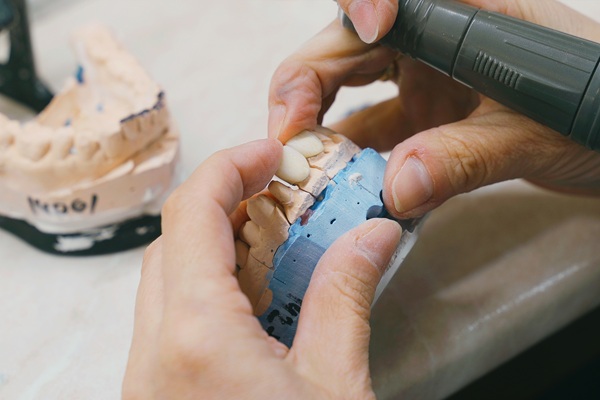
Denture repair is a critical service for maintaining your oral health and daily comfort. It is often required after sudden damage or a change in how the dental appliance fits. If you are experiencing irritation in your soft tissues or a broken base, professional repair from a dental provider can help you continue to eat, speak, and smile with confidence.
Why professional repair is necessary
It is tempting to attempt denture repair at home with household adhesives or DIY kits. However, these methods are dangerous and can cause permanent damage to the prosthetic. For example, household glues contain toxic chemicals that are not safe for patients to use on an oral appliance, leading to severe allergic reactions or chemical burns. Furthermore, the thickness of a layer of glue can alter the patient's bite alignment, leading to headaches or jaw pain.
In contrast, licensed dental professionals use medical-grade resins and curing lights to ensure the repair is accurate and biocompatible. They also have the equipment to verify that the patient's jaw remains aligned after the repair is complete. Having the repair performed by a professional ensures the appliance remains safe for long-term oral use.
Common signs of denture damage
Dental appliances endure significant pressure during the chewing process, which eventually leads to structural fatigue. While modern materials are more resilient than those in the past, they are not impervious to the passage of time or accidental impact. Identifying the early signs of deterioration allows for minor adjustments before a complete fracture occurs.
Fractured or cracked dentures
A common issue is the development of hairline fractures in the acrylic base. These small cracks can result from minor incidents, such as the repetitive stress of biting forces or from dropping the appliance during a cleaning routine. If a crack is ignored, the material eventually weakens, resulting in a clean break that renders the denture unusable. Professional repair restores the internal strength of the acrylic, ensuring the device can withstand functional forces once again.
Chipped or worn teeth
The artificial teeth on a denture arch are prone to wear, just like natural enamel. Over several years, the chewing surfaces may become flattened or dull. This loss of texture reduces the ability to grind food efficiently, which can lead to digestive issues if the wearer cannot properly process their meals. Furthermore, chipped teeth create sharp edges that may cut the tongue or the inside of the cheeks.
When a single tooth chips or falls out of the base, it does not necessitate an entirely new appliance. A dental technician can replace individual teeth to restore the appearance and functional harmony of the smile. It is also important to maintain the height of these teeth to prevent strain on the temporomandibular joint.
Loose or ill-fitting dentures
A common misconception is that dentures should fit perfectly forever. However, the underlying bone structure of the mouth undergoes a natural process known as resorption. As the jawbone shrinks, a gap forms between the denture base and the gums. This lack of stability leads to several functional challenges that require professional intervention, including:
- Slippage while chewing or speaking
- Persistent gum sores due to the appliance rubbing against soft tissue
- Food particles are frequently trapped beneath the denture base
- Clicking sound when the upper and lower arches meet
- Increased reliance on over-the-counter dental adhesives
- Difficulty chewing foods like meats or crunchy vegetables
- General facial sagging caused by a loss of vertical support
Fortunately, a dentist can often perform a reline to fill these gaps, which stabilizes the fit without the need for a full replacement.
When to seek emergency denture repair
If an appliance breaks during a meal or after a fall, it is important to contact a dental professional immediately. Attempting to wear a broken denture can lead to severe infections or tissue injury. Even if the damage seems minor, such as a loose wire or a tiny chip, the structural compromise will only worsen with continued use. Immediate communication with a dental provider ensures that the repair is handled as soon as possible to minimize the time spent without a functional smile.
Get denture repair in the Columbia area
Investing in denture repair is a proactive step toward protecting your long-term oral health and comfort. Whether the issue is a minor chip or a change in how the appliance fits, professional repair ensures that you do not have to sacrifice the ability to eat or speak clearly. If you notice any changes in the performance of your dental prosthetic, reach out to our Columbia office to discuss the best path forward for your smile.
Request an appointment here: https://davisanddingle.com or call Davis & Dingle Family Dentistry at (803) 567-1804 for an appointment in our Columbia office.
Check out what others are saying about our dental services on Yelp: Denture Adjustments and Repairs in Columbia, SC.
Recent Posts
Dentures restore both function and aesthetics, enabling individuals to speak, eat, and smile with confidence. However, over time, they will require professional denture repairs. Just like natural teeth, dentures require proper care and maintenance to function effectively. Sometimes, even with proper care, dentures may show signs of wear and tear that necessitate professional intervention. Recognizing…
Dentures are a great solution, but they do require dental adjuments over time. Patients using denture make notice that after a while the fit isn't quite what it used to be. When this happens, it can make it difficult to speak or chew properly. If you notice these changes then it's time to schedule a…
Periodic denture adjustments make life with dentures more comfortable. Regular maintenance of your dentures means making sure that they fit well, which enables you to eat, speak, and smile with ease. But living with dentures does not always live up to expectations. For starters, there is an adjustment period for first-time wearers of dentures. As…
It is helpful to understand the different types of denture repairs to determine which is right for you. This review discusses denture rebasing and denture relining for denture repairs to avoid the need for complete denture replacement.The three main types of denture repairs are general denture repair, denture rebase, and denture reline. One may be…